Rainforest Living: The Rise of Sustainable Wellness Resorts in Janda Baik
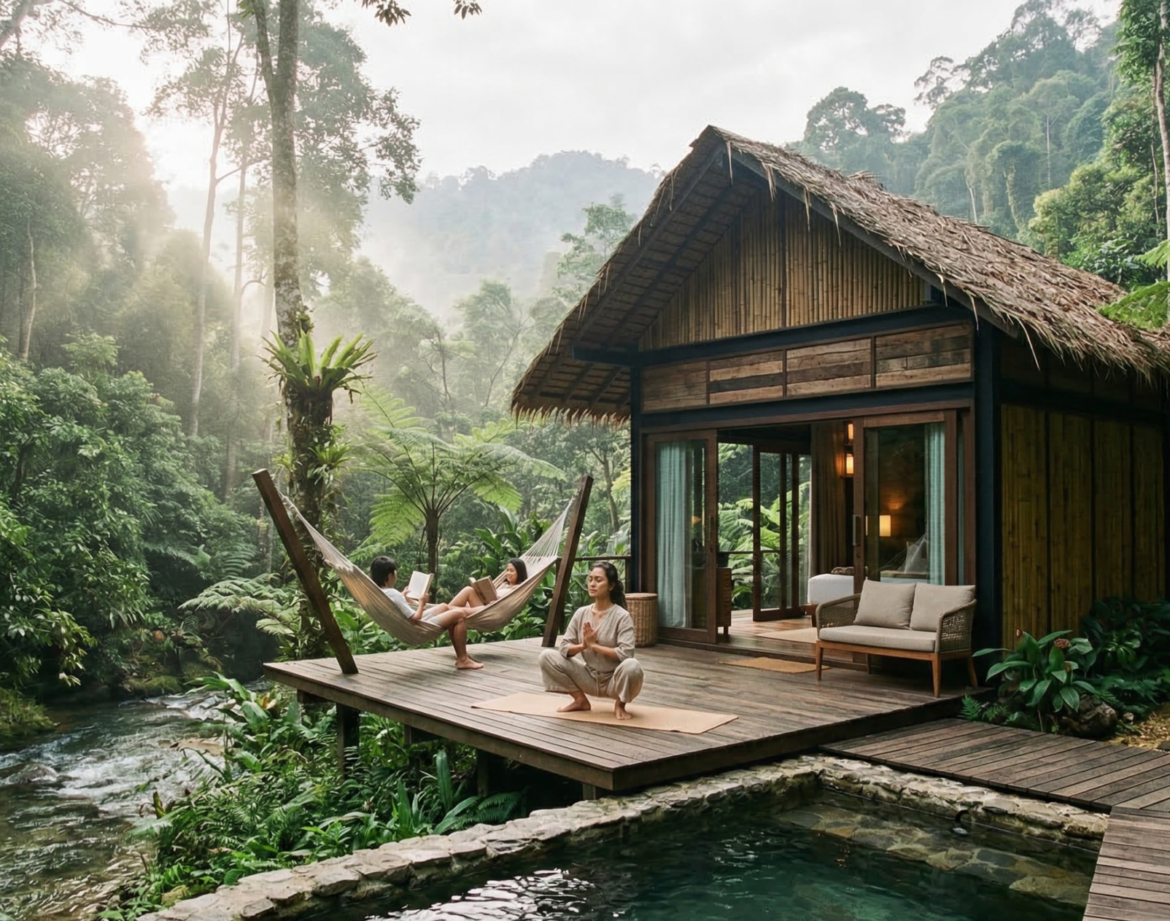
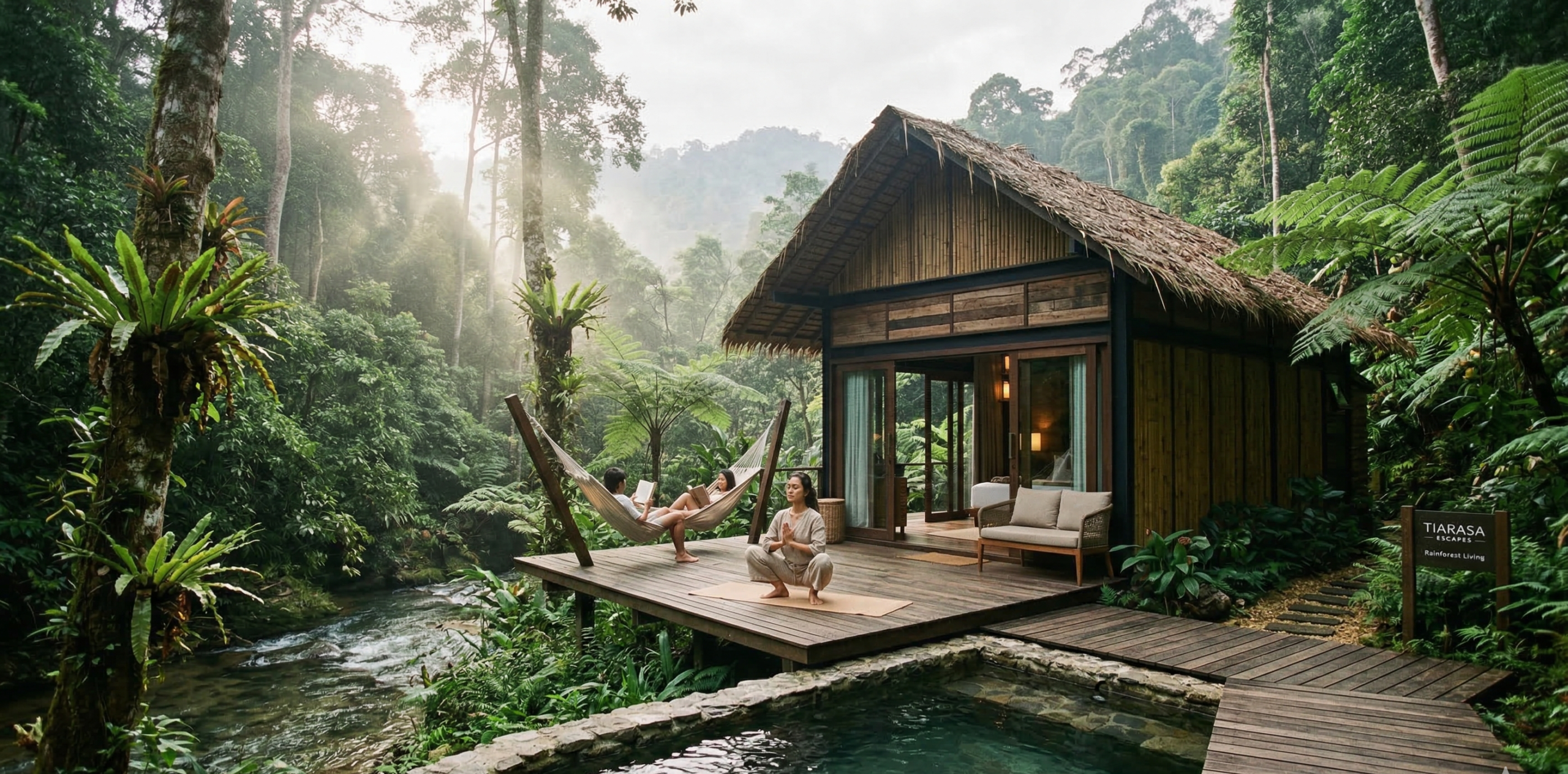
Janda Baik has rapidly evolved from a quiet highland outpost into Malaysia’s premier sanctuary for eco-conscious luxury. Modern travelers are increasingly trading traditional hotel towers for “low-impact” architecture that breathes with the forest, such as the pod-like chalets at VanaVasa Eco-Resort or the industrial-chic retreats at Happi Village. These spaces prioritize sustainability through clever design, utilizing natural ventilation to forgo energy-heavy air conditioning, harvesting rainwater, and incorporating “toxin-free” salt-water pools that blend seamlessly into the misty Pahang landscape.
For the burnt-out city dweller, the rise of luxury glamping offers a “digital detox” without the sacrifice of comfort. Resorts like Tiarasa Escapes and IKAN Glampsite provide safari-style tents and treehouse villas that allow guests to fall asleep to the chorus of the rainforest while enjoying premium linens and en-suite bathrooms. This trend toward “soft adventure” focuses on restorative experiences—think morning ranger-led nature walks, yoga by the Enderong River, and farm-to-table dining, allowing professionals from Kuala Lumpur to hit the “reset” button just 45 minutes away from the concrete jungle.
The shift toward these wellness-centric retreats also reflects a broader movement in Malaysian property and hospitality: the value of “untouched” space. Developments like Tanarimba and various private estates now emphasize permanent forest reserves and organic gardens over manicured lawns. By choosing these sustainable stays, visitors aren’t just booking a weekend away; they are supporting a conservation-first model that proves luxury and environmental stewardship can coexist. Whether it’s stargazing from a private hammock or enjoying a slow morning at a riverside café, Janda Baik has become the gold standard for intentional, green living in 2026.